
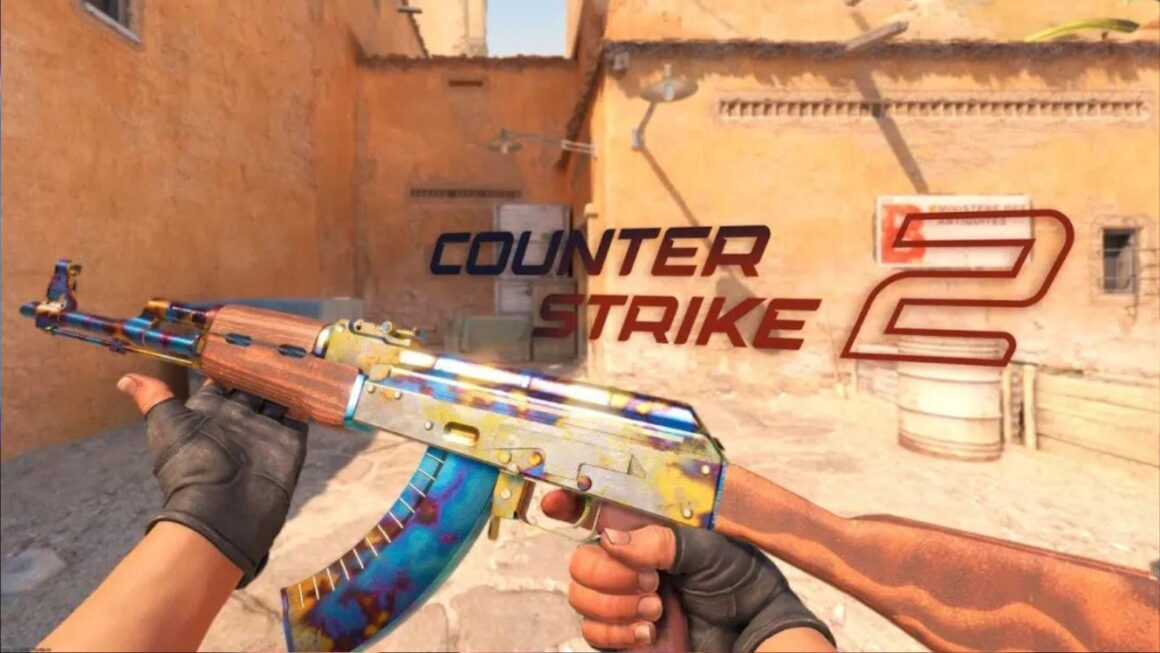
Weapon skins did not remain simple cosmetic extras for long. Players began comparing finishes, searching for unusual patterns, and arranging themed inventories. Cases supplied many of those items, but their larger effect was to give the community defined sets to study. A skin could be used, sold, traded, or kept for years. Inventories gradually became personal collections.
The Update That Started It
Valve introduced weapon finishes to CS with the Arms Deal update in August 2013. It added more than 100 decorated weapons, including items from cases and collections, which players could trade or sell through Steam.
Each case had a fixed list of possible finishes arranged by rarity. Opening one required its matching key, while the result was random. Most openings did not produce a knife or a top-tier weapon. Still, every release acquired an identity, usually shaped by its best-known Covert skins and pool of rare special items. This made collecting approachable. A player could concentrate on one case, collection, or weapon.
Rarity Gave Players a Common Language
Colour-coded grades made the hierarchy easy to understand. Blue items were common compared with pink and red ones. Knives, and gloves in certain cases, appeared as rare special items. Scarcity made them collection targets, although rarity alone never guaranteed a market price.
Players also created their own categories. Some collected every AK-47 finish; others built red inventories or matching CT and T loadouts. Workshop artists developed followings, while older collections represented particular periods. Valve supplied the catalogue; players organised it.
Cases also gave older releases a lasting identity. When a case stopped appearing frequently, its contents did not disappear from discussion. Collectors continued searching for particular finishes, while unopened cases became collectible objects themselves. The age of a case could connect it with an operation, update, or period in competitive Counter-Strike. This historical interest did not guarantee rising prices, but it gave players another reason to value items beyond their appearance in the game.
Two Copies Can Be Different
Counter-Strike items contain more information than their names reveal. A skin has a wear value that determines its wear category and a float value (from 0 to 1): Factory New, Minimal Wear, Field-Tested, Well-Worn, or Battle-Scarred. Some finishes cannot exist in all five conditions because their ranges are restricted.
Pattern index adds another variable by controlling texture placement on pattern-based finishes. Collectors value certain placements more highly. Well-known examples occur among Case Hardened, Fade, and Doppler finishes. Its importance depends on the skin; a different number does not automatically make an item valuable.
StatTrak versions include a kill counter. Souvenir items are connected with official tournament drops, while stickers and their placement create further differences. Collectors therefore examine the individual item, not just the finish listed in its name.
Trading Made Collecting Social
The Steam Community Market gave items public listings and sales data. Direct trading helped players find examples unavailable through ordinary listings. External databases and inspection tools later simplified checks of floats, patterns, and stickers. Knowledge became part of the hobby. Collectors discussed discontinued collections, float ranges, patterns, and old sticker combinations. They posted screenshots, compared loadouts, and followed notable skins between owners. A public inventory could display taste rather than simply expensive items.
The market created risks. Prices could move quickly, and a high listing did not prove an item would sell. Valuable inventories attracted phishing, impersonation, and dishonest cash trades. Collecting safely required account security.
Openings Became Public Entertainment
Case openings suited videos and livestreams because the result required little explanation. Viewers understood the reaction when a rare item appeared or passed by. Third-party sites created formats around the same suspense. A case battle usually compares items opened by several participants under a site’s rules. It is not a Valve feature or an official case opening. These broadcasts introduced players to particular finishes but could create misleading expectations. Paid openings are chance-based. A knife clip says nothing about the next result, and cases are not a reliable way to earn money.
The Collection Continued in CS2
When CS2 replaced CS in 2023, players retained their inventories. The newer engine and lighting changed some finishes, but ownership continued. Old cases, operations, and collections still represented earlier periods. Collectors may associate an item with a former map pool, tournament, roster, trade, or first opening. Appearance and scarcity matter, but so does personal history.
Final Thoughts
Cases organised Counter-Strike cosmetics into recognisable releases, while players built a culture around them. They documented differences, created themed inventories, studied prices, and followed individual items. Trading connected collectors, while online content made rare openings shared events. CS2 inherited that activity. A skin became more than decoration: it was a specific item with a condition, history, and place in someone’s collection.