
We all know someone who changes their personality depending on who they’re talking to. We’ve all met someone who changes their personality depending on who they’re talking to, it’s confusing, right? Brands can be the same. A company might post something fun on Instagram, but their website reads like a textbook, or their emails sound cold and robotic. This inconsistency is off-putting and damages trust. Customers want a brand that feels familiar and consistent across every interaction. In fact, 87% of shoppers are willing to pay more for products from brands they trust.
Maintaining that consistency isn’t easy, it takes time and effort. That’s where AI can help, not by replacing creativity, but by acting as your brand’s editor-in-chief. Let’s explore how you can use smart tools to build a consistent voice that resonates everywhere.
TL;DR:
Building a consistent brand voice is essential for trust and recognition, but it’s challenging to maintain. AI tools can help ensure your messaging aligns with your brand’s personality across every channel.
Why Consistency Is Your Secret Weapon
Before we dive into tech, let’s talk about why this matters. A brand is more than just visual design. Sure, your logo is important, and your color palette sets a mood. But language is how you actually connect.
When your voice is consistent, it does three big things:
- It Builds Recognition: Just like you can recognize a friend’s voice on the phone without seeing their face, customers should recognize your brand by reading your copy.
- It Creates Trust: Consistency implies reliability. If your voice is steady, customers assume your product and service will be too.
- It Humanizes Your Business: A distinct voice gives your brand a personality. People connect with personalities, not faceless corporations.
The problem is that as businesses grow, more people get involved in writing. You have social media managers, support agents, marketing teams, and freelancers all typing away. Without a central guide, things get messy fast. AI can be that central guide.
How AI Understands You – Create Your Logo and Brand Identity
It might seem weird to ask a machine to help you sound more human. But AI models are actually incredibly good at analyzing patterns in language. They don’t just see words; they see style, tone, and sentiment.
Think of AI as a really observant student. If you feed it examples of your writing, it studies how you construct sentences. Do you use short, punchy phrases? Do you love puns? Are you serious and authoritative, or laid-back and friendly?
Once the AI gets your unique writing style, it can help you recreate it across all your content. It acts like a friendly guide, making sure everything you write sounds like you and keeping your voice consistent.
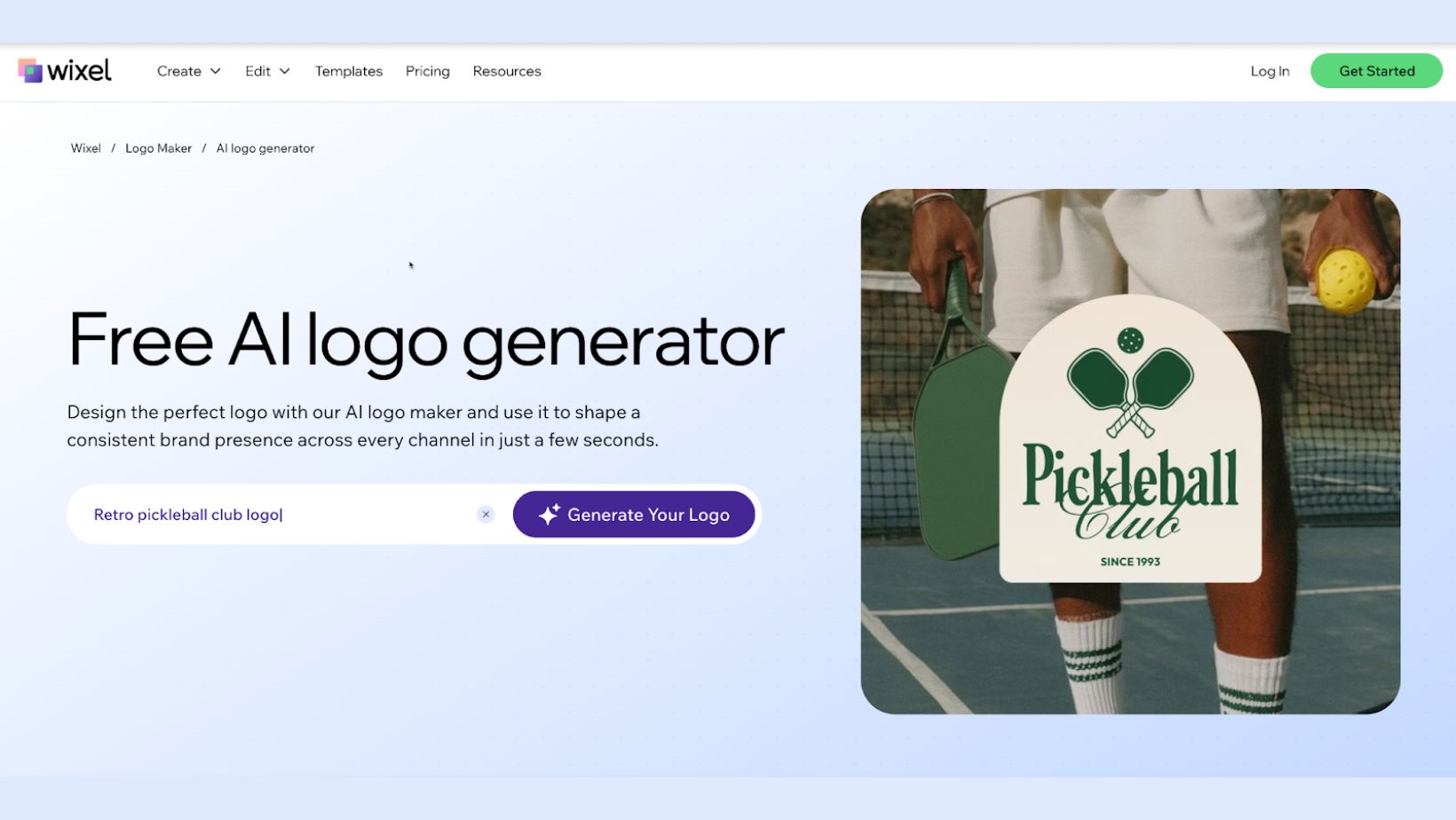
You can also use AI to create a logo that visually represents your brand. By telling an AI logo generator about your business and the feeling you want to convey, it can produce a range of logo concepts. For example, you could ask for “a minimalist logo for a handmade pottery business, with earthy tones and a modern font.” The AI will then generate unique designs based on your description, giving you a strong starting point for your brand’s visual identity.
Analyzing Your Current State
First, AI can look at what you are already doing. Tools can scan your existing blog posts, emails, and social captions to give you a “voice audit.” They might tell you that your blog is very formal (reading level: college professor) but your Instagram is very casual (reading level: high school student).
This insight is gold. It shows you exactly where the gaps are so you can start fixing them.
Generating On-Brand Drafts
This is the most popular use case. Instead of staring at a blank screen, you can ask an AI writer to “write an email about our summer sale in a witty, energetic tone.”
The AI generates a draft that hits those emotional notes. It won’t be perfect every time, but it gives you a solid starting point that is already 80% of the way there. You just need to tweak it, rather than writing from scratch.
Practical Ways to Use AI for Branding
You don’t need a massive budget or a team of developers to start using these tools. Here are some concrete ways you can integrate AI into your workflow right now.
1. Creating a Style Guide That Actually Gets Used
Most companies have a brand style guide—a PDF document that sits in a folder and gathers dust. AI can turn that static document into an active tool.
You can train specific AI writing assistants on your guidelines. You tell the tool: “We never use the passive voice,” “We always use the Oxford comma,” and “We refer to our customers as ‘partners’.”
Now, whenever you or your team writes something, you can run it through the tool. It will flag anything that breaks your rules. It’s like having a brand editor sitting on your shoulder, gently correcting you in real-time.
2. Scaling Your Social Media
Social media is hungry. It needs constant content. Keeping up with that demand while staying “in character” is exhausting.
AI tools can take one core piece of content, like a blog post and remix it for different platforms while keeping the voice intact. It can take a 1000-word article and turn it into:
- A snappy Twitter thread.
- A professional LinkedIn summary.
- A fun Instagram caption.
The core message stays the same, and the AI ensures the tone shifts slightly to fit the platform without losing your brand’s essence.
3. Customer Support That Doesn’t Sound Robotic
This is ironic, but AI can make your automated responses sound less robotic.
Standard chatbots often sound stiff and cold. “Your ticket has been received. Please wait.” It gets the job done, but it’s not exactly warm.
With advanced AI, you can program your support bots to speak your language. If your brand is playful, your bot can say, “Hold tight! We’ve grabbed your ticket and our team is diving in. Expect a reply soon!”
It’s a small change, but it keeps the customer inside your brand experience, even when they are waiting for help.
The Best Ai Logo Generators:
| AI Logo Generator | Description | Key Features |
| Wixel | A versatile and user-friendly AI logo generator known for creating modern and customizable designs. | Intuitive interface, customizable templates |
| Looka | A smart logo maker that uses AI to design unique logos for businesses. | AI-driven suggestions, branding packages |
| Tailor Brands | An all-in-one platform offering logo design and branding solutions tailored to your needs. | Full branding suite, automated designs |
| Canva | A popular design platform that includes an easy-to-use logo generator. | Drag-and-drop interface, numerous templates |
| Hatchful | Shopify’s free logo maker that focuses on quick and simple logo creation. | No design skills required, free download |
Step-by-Step: How to specific AI Training
Ready to try this? Here is a simple path to getting started.
Step 1: Define Your Voice First
AI can’t help you if you don’t know who you are. Before you open any software, write down 3-5 adjectives that describe your brand. Are you Bold, Direct, and Serious? Or are you Friendly, Helpful, and Quirky?
Also, define what you are NOT. “We are funny, but not sarcastic.” “We are smart, but not academic.” These guardrails help the AI understand the nuance.
Step 2: Gather Your “Golden Samples”
Find the best things you’ve ever written. The emails that got great replies, the blog posts that people loved, the about page that perfectly captures your mission.
This is your training data. When you start using an AI tool, you will often have the option to upload examples or “teach” it your style. The better your examples, the better the output.
Step 3: Experiment and Iterate
Start small. Use an AI tool to help write your social media captions for a week. Review the output carefully.
If the AI writes something that sounds off, don’t just rewrite it, try to understand why it was off. Was it too formal? Too slang-heavy? adjust your prompts. Instead of saying “Write a caption,” try “Write a caption that sounds like a helpful neighbor offering advice over the fence.” The more specific your direction, the better the result.
Step 4: The Human Polish
This is vital. Never copy-paste AI content directly without reading it. AI is a tool, not a replacement for your brain. It can get facts wrong, or miss a cultural nuance.
Your job is to add the final coat of polish. Add a personal anecdote, check the facts, and make sure it has that spark of human connection that machines can’t quite mimic yet.
Real-World Examples
Let’s imagine a few scenarios to see how this plays out.
The Coffee Shop
- Brand Voice: Warm, cozy, community-focused, energetic.
- Without AI: The owner is busy. They post a photo of a latte with the caption: “New beans available. Come buy some.” It’s functional, but dry.
- With AI: The owner inputs the info into a tool with their tone settings. The AI suggests: “Wake up and smell the magic! ☕✨ Our new Ethiopian roast just landed and it’s giving us serious cozy vibes. Swing by for a cup?”
- Result: The second caption fits the vibe of the shop much better and engages the customer.
The Financial Consultant
- Brand Voice: Trustworthy, clear, calm, authoritative.
- Without AI: They write a blog post full of jargon because they want to sound smart. It ends up confusing potential clients.
- With AI: They use a tool to simplify the language. They ask the AI to “Rewrite this paragraph to be clear and reassuring for a first-time investor.”
- Result: The content becomes accessible. “We utilize market fluctuations to mitigate risk” becomes “We use changes in the market to help protect your money.” It’s still professional, but much clearer.
The Future of Brand Consistency
As these tools get smarter, they will become even more integrated into our daily work. We are moving toward a world where your brand voice lives in your software, actively helping every employee communicate better.
Imagine a new hire joining your customer service team. Instead of spending weeks memorizing tone guidelines, their email software automatically suggests edits to help them sound like a seasoned pro from day one. That is a massive advantage.
It also frees you up to do the big thinking. When you aren’t obsessing over every comma and adjective, you have more brain space to dream up new campaigns, develop new products, and connect with your community.
Embracing the “New” CEO of Content
In a previous article, we talked about how data is the new CEO for decision-making. Well, think of AI as the new Creative Director for your brand voice.
It doesn’t come up with the original vision, that’s still you. You are the one with the passion and the story. But the AI ensures that vision is executed perfectly, every single time, across every single channel.
It allows a small team to sound big. It allows a busy founder to sound present. And most importantly, it ensures that when your customers hear from you, they know exactly who is speaking.
So, don’t be afraid to let a little artificial intelligence into your creative process. It might just be the most human thing you can do for your brand. By removing the inconsistency and the robotic “corporate speak,” you clear the way for your real personality to shine through.
Start exploring the tools out there. Feed them your best work. And watch as your brand voice transforms from a scattered mix of styles into a powerful, recognizable, and consistent melody that your customers love to hear.